
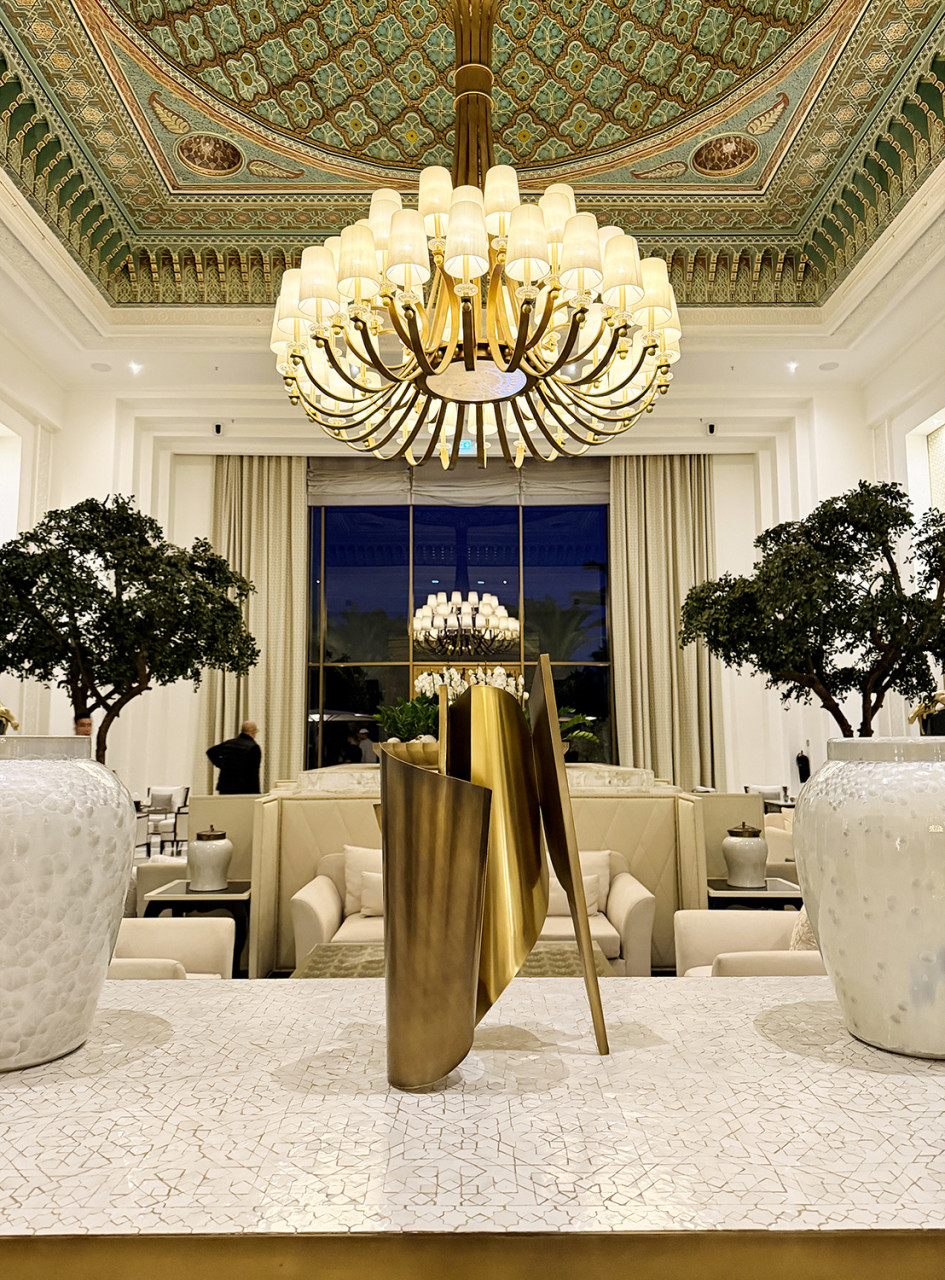
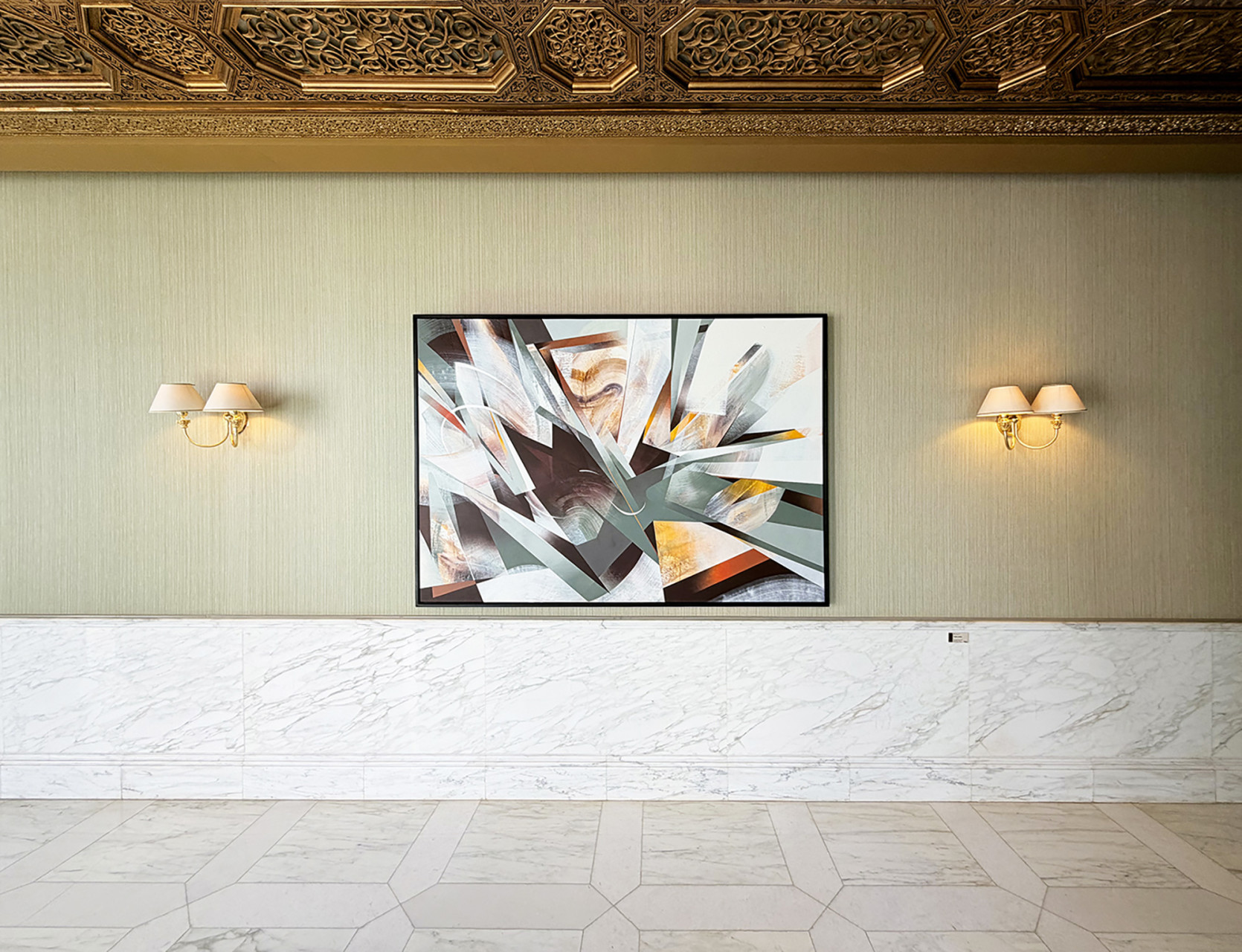
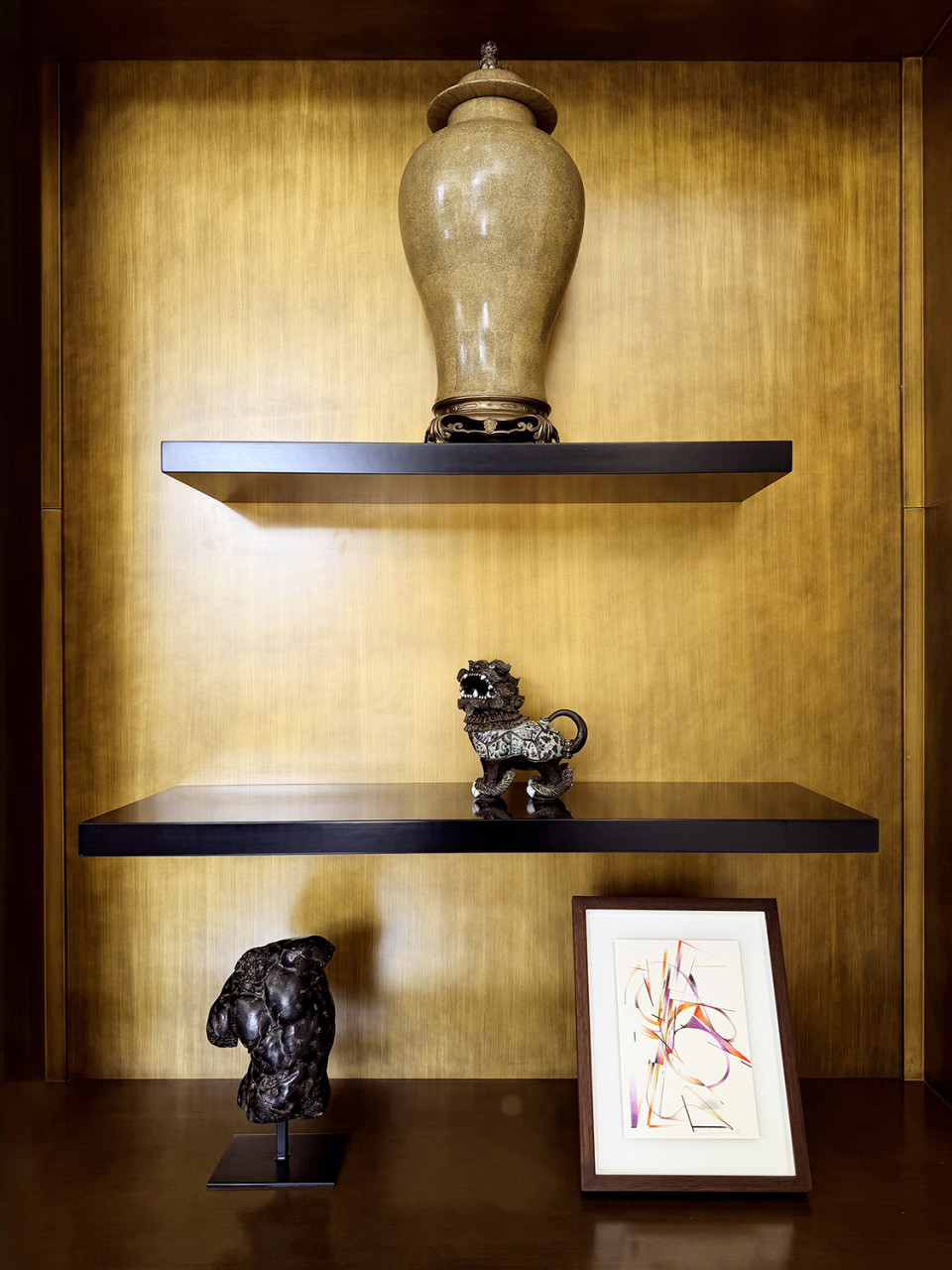
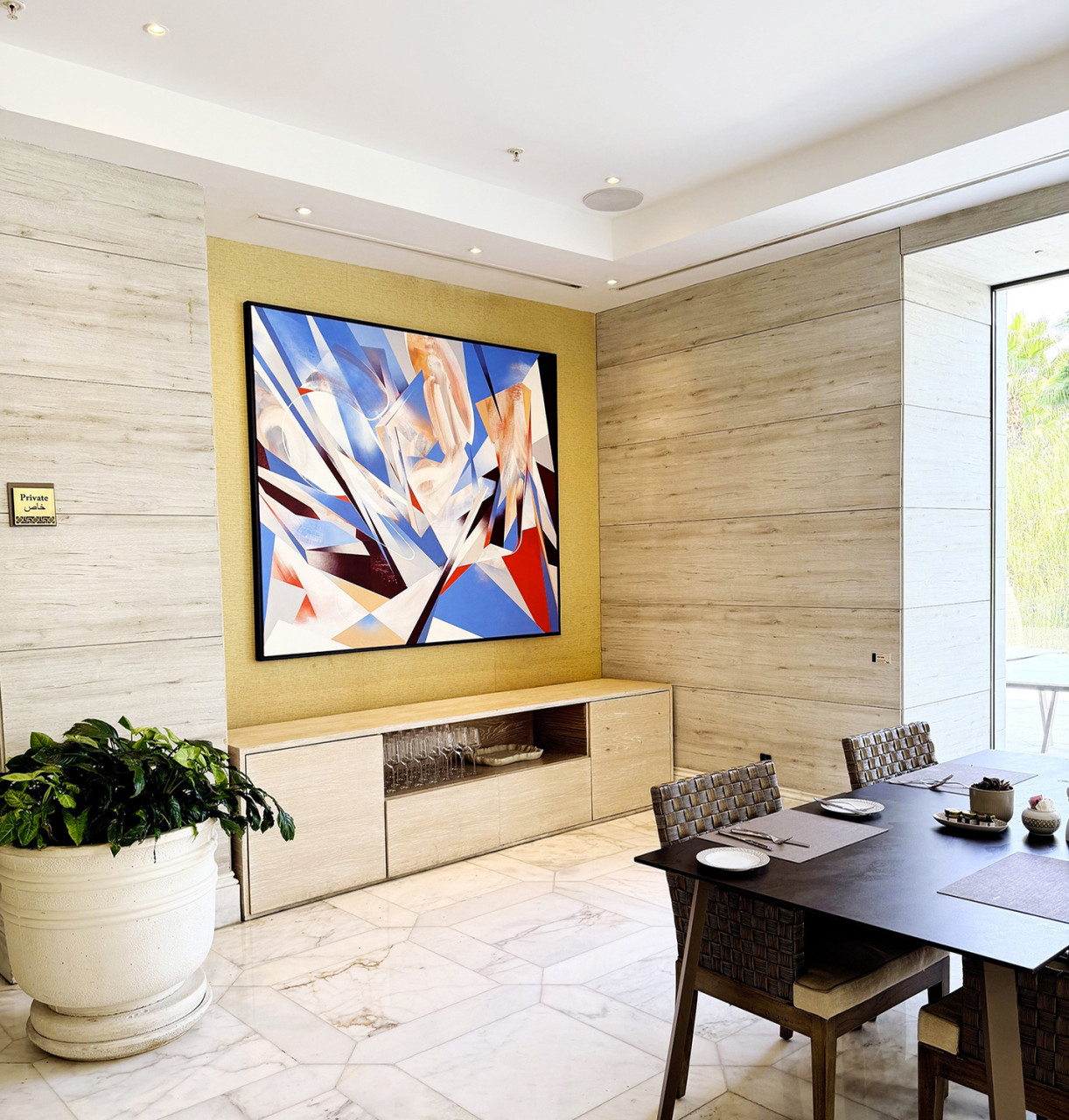
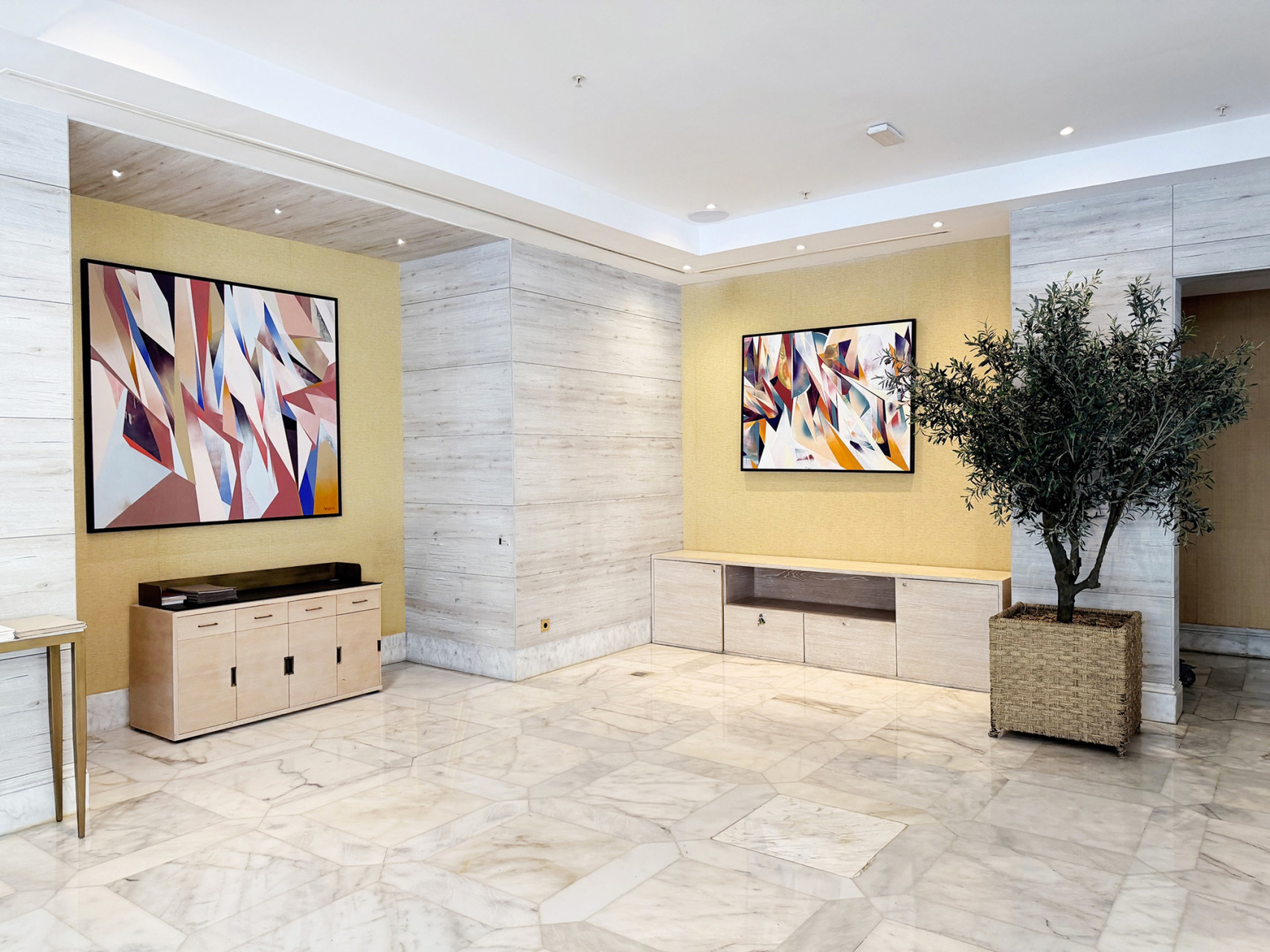
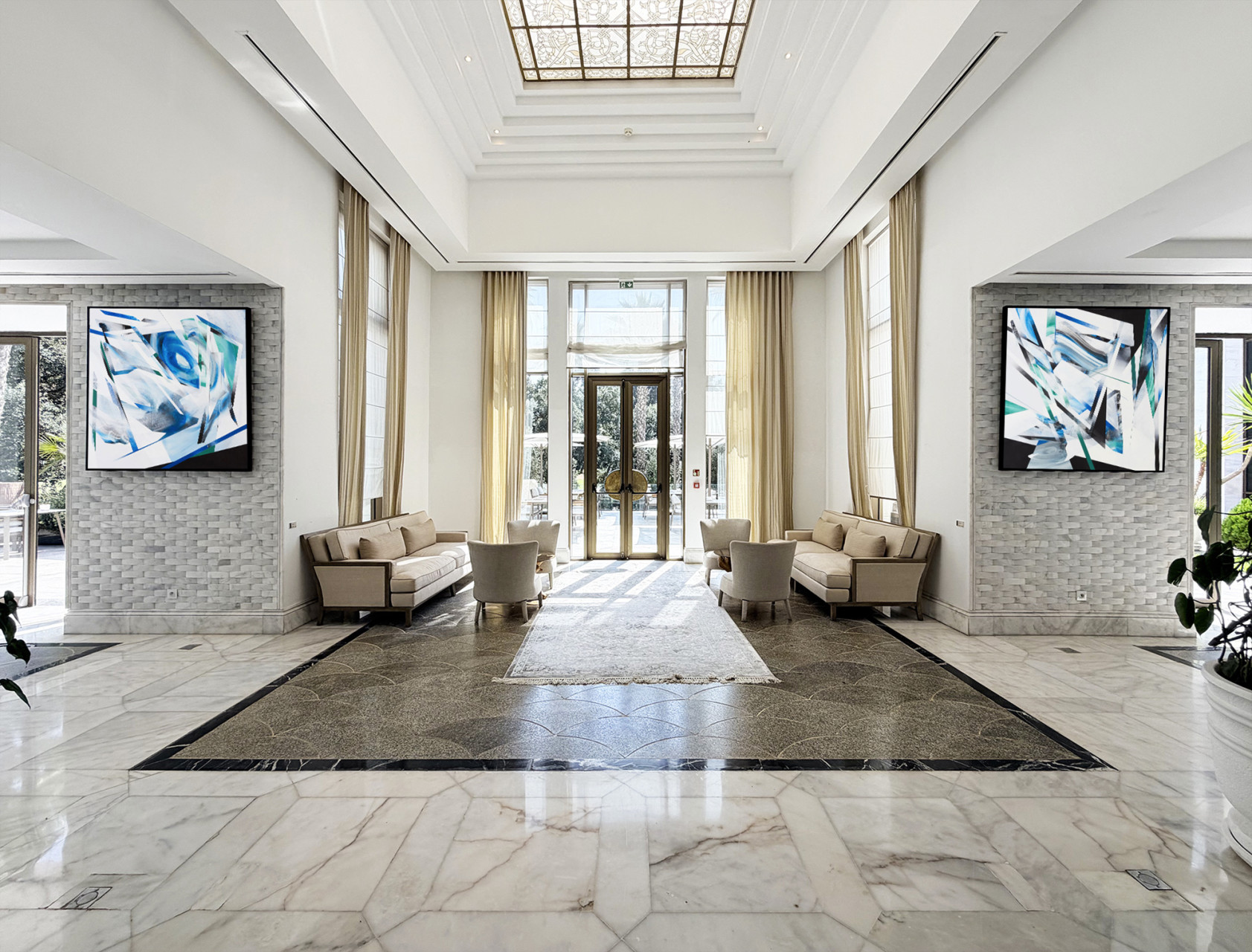
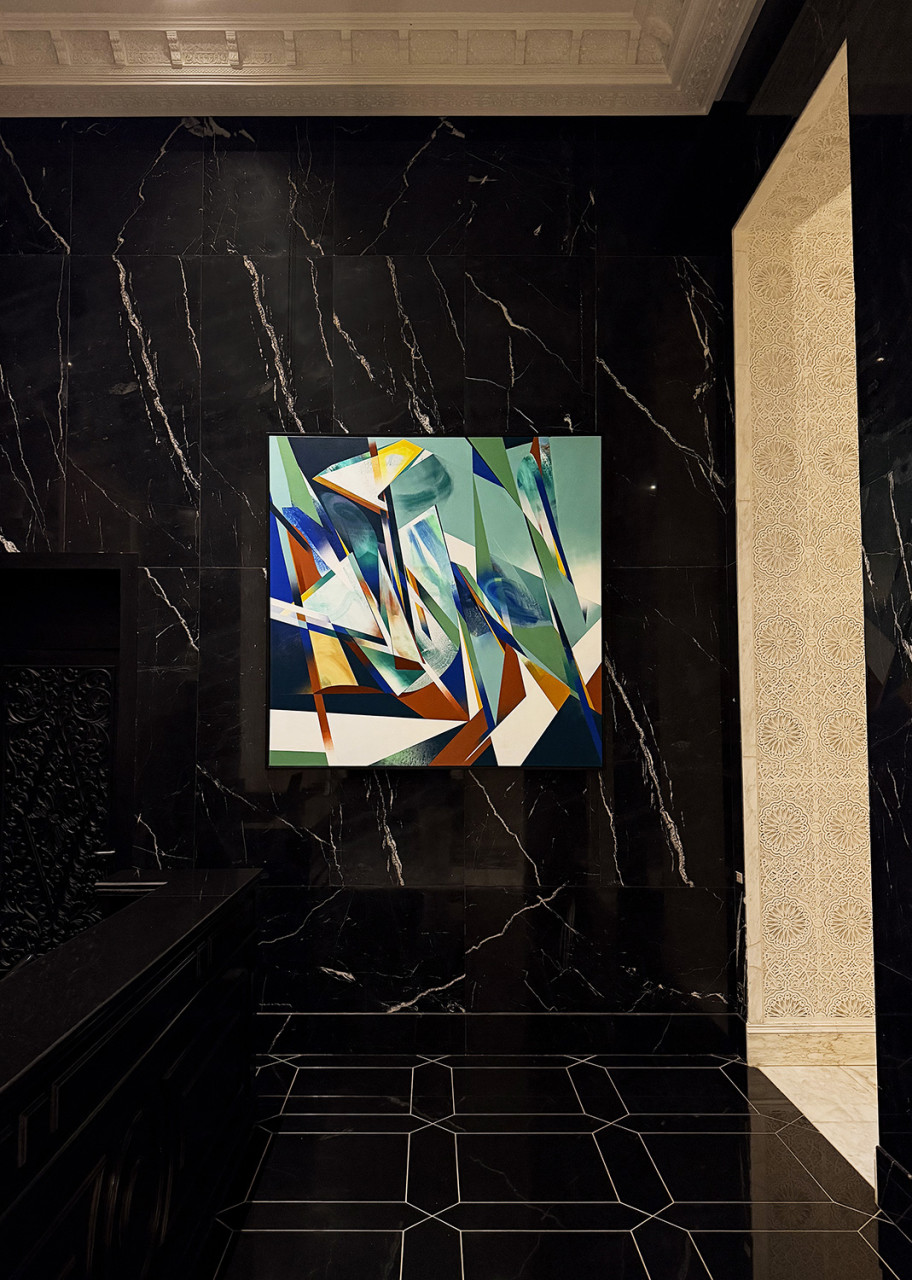
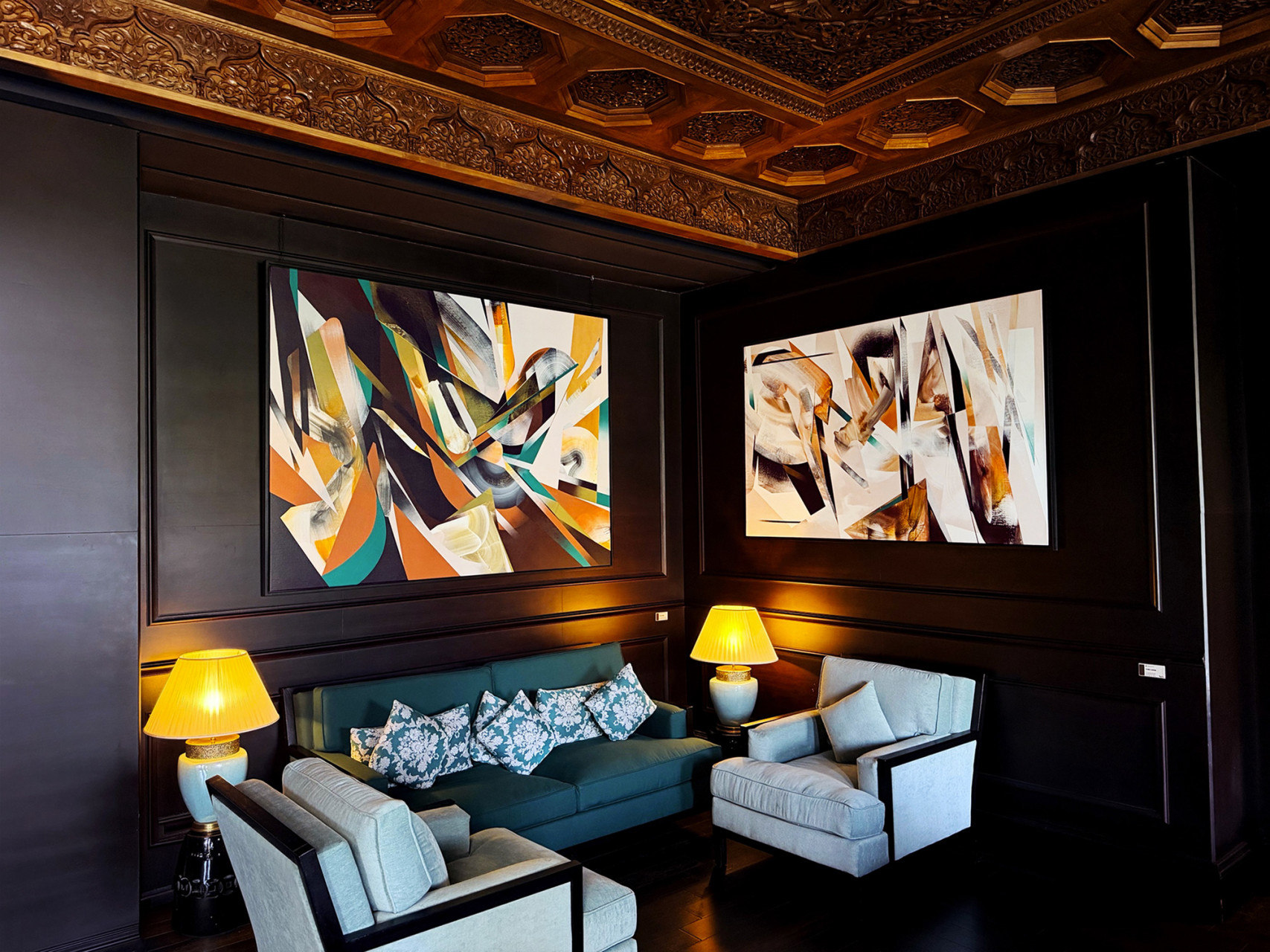
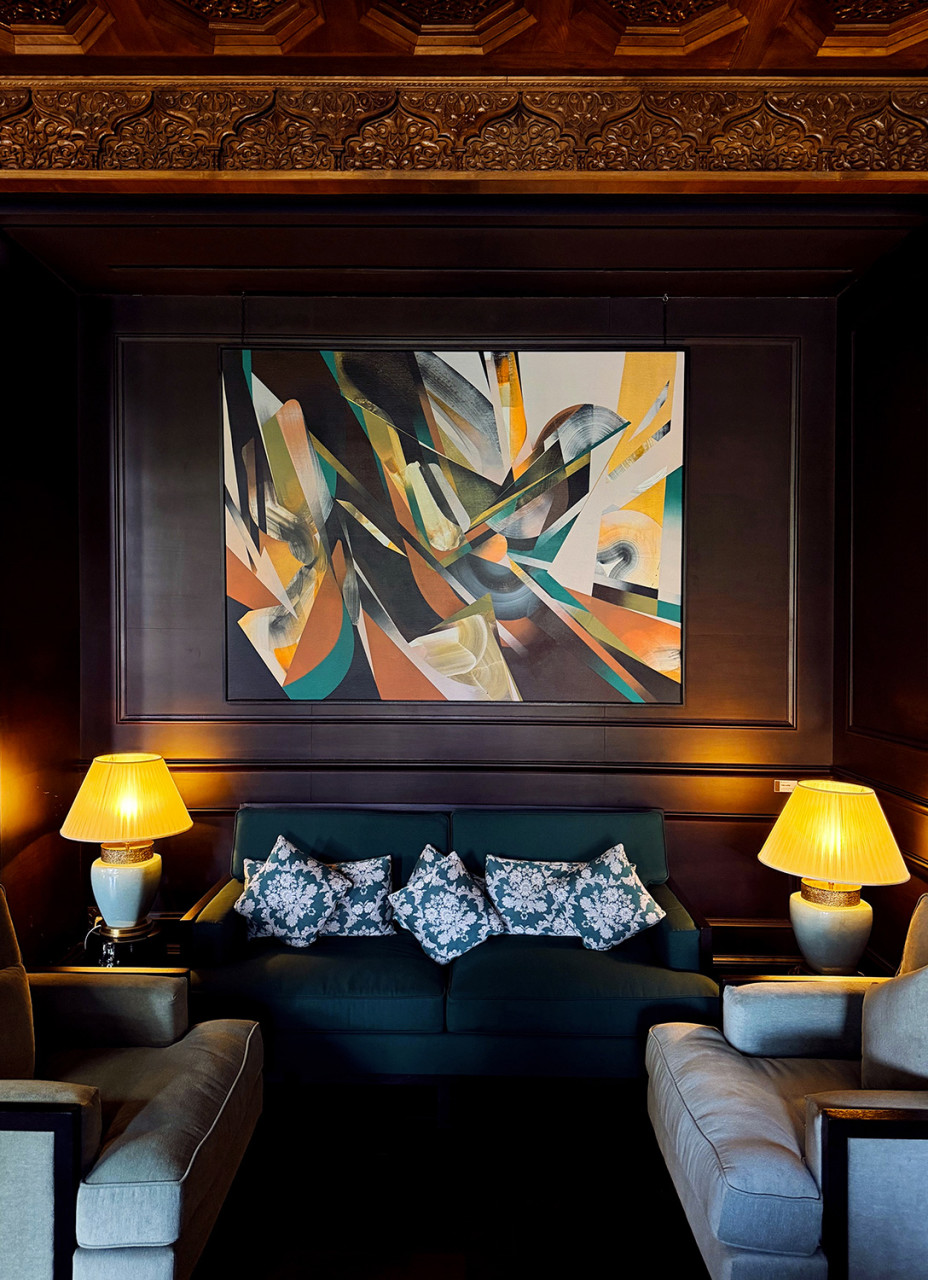
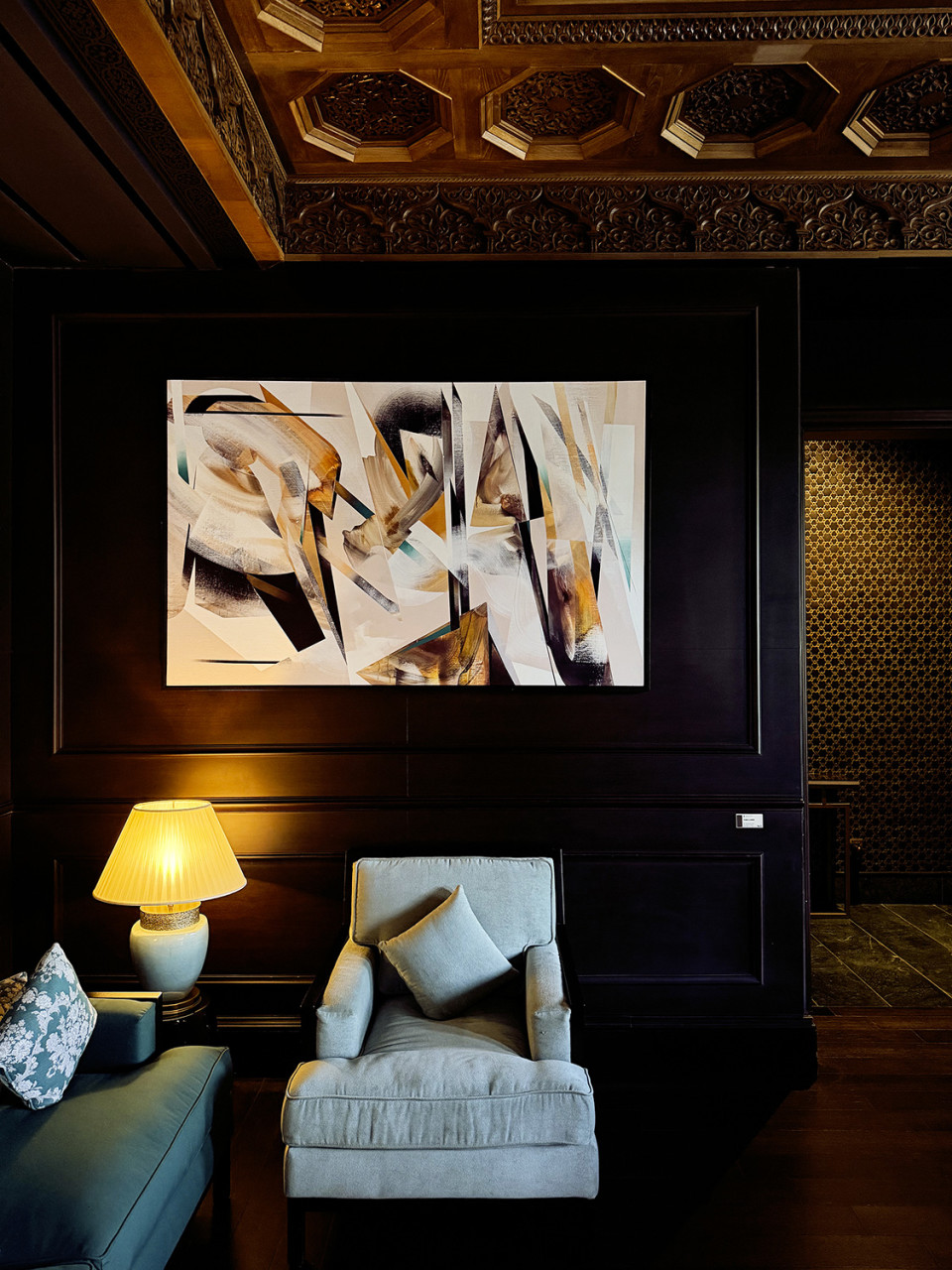
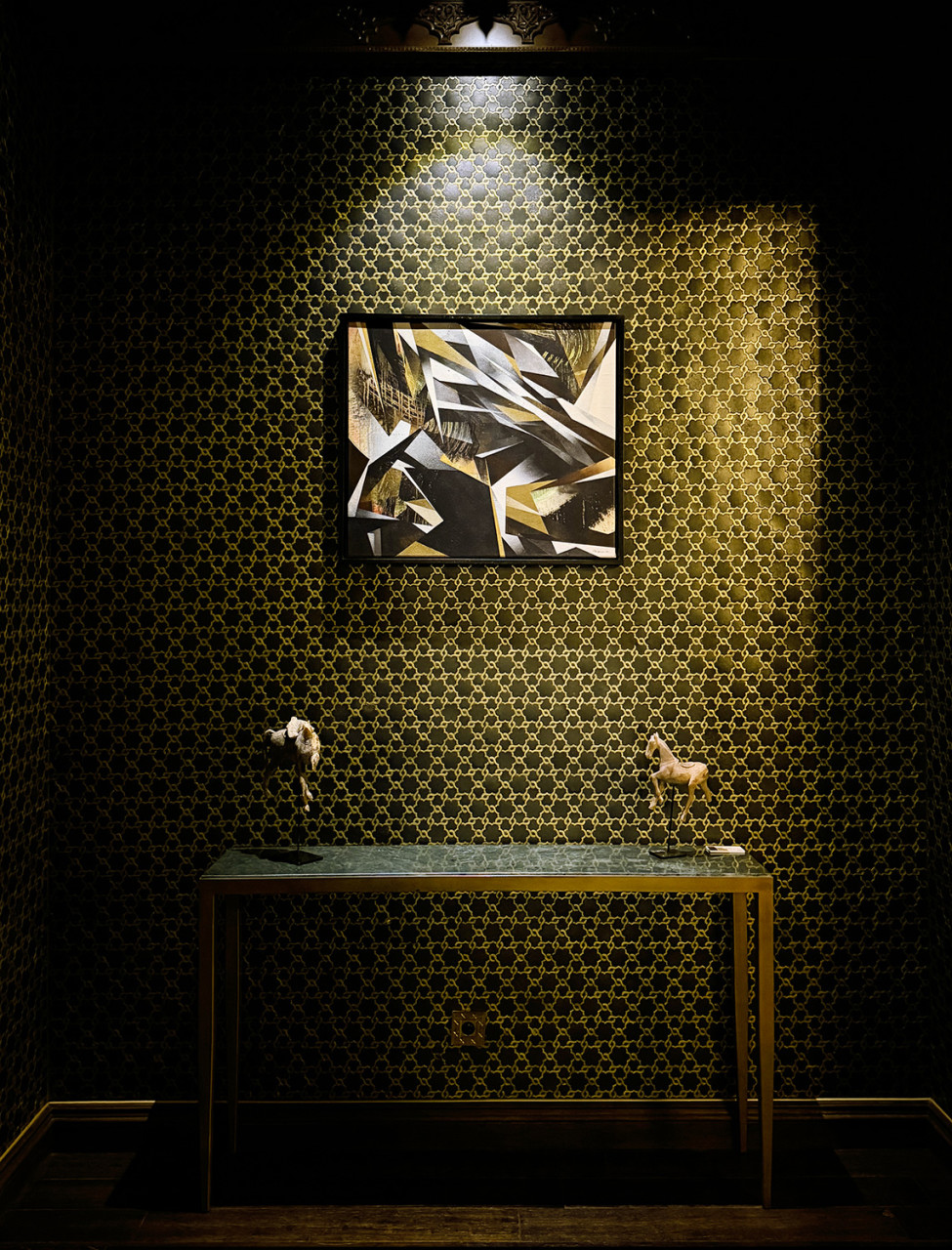
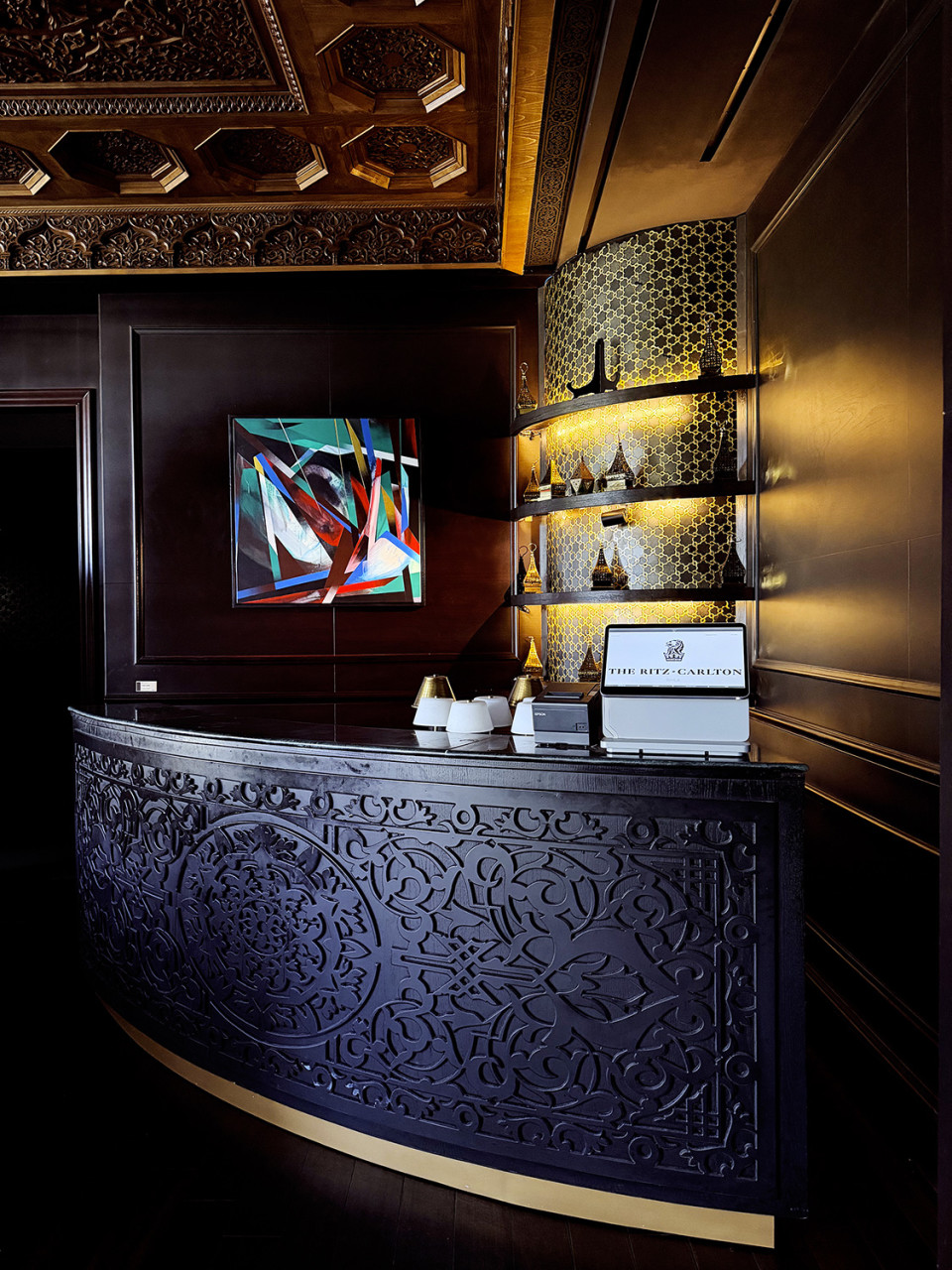
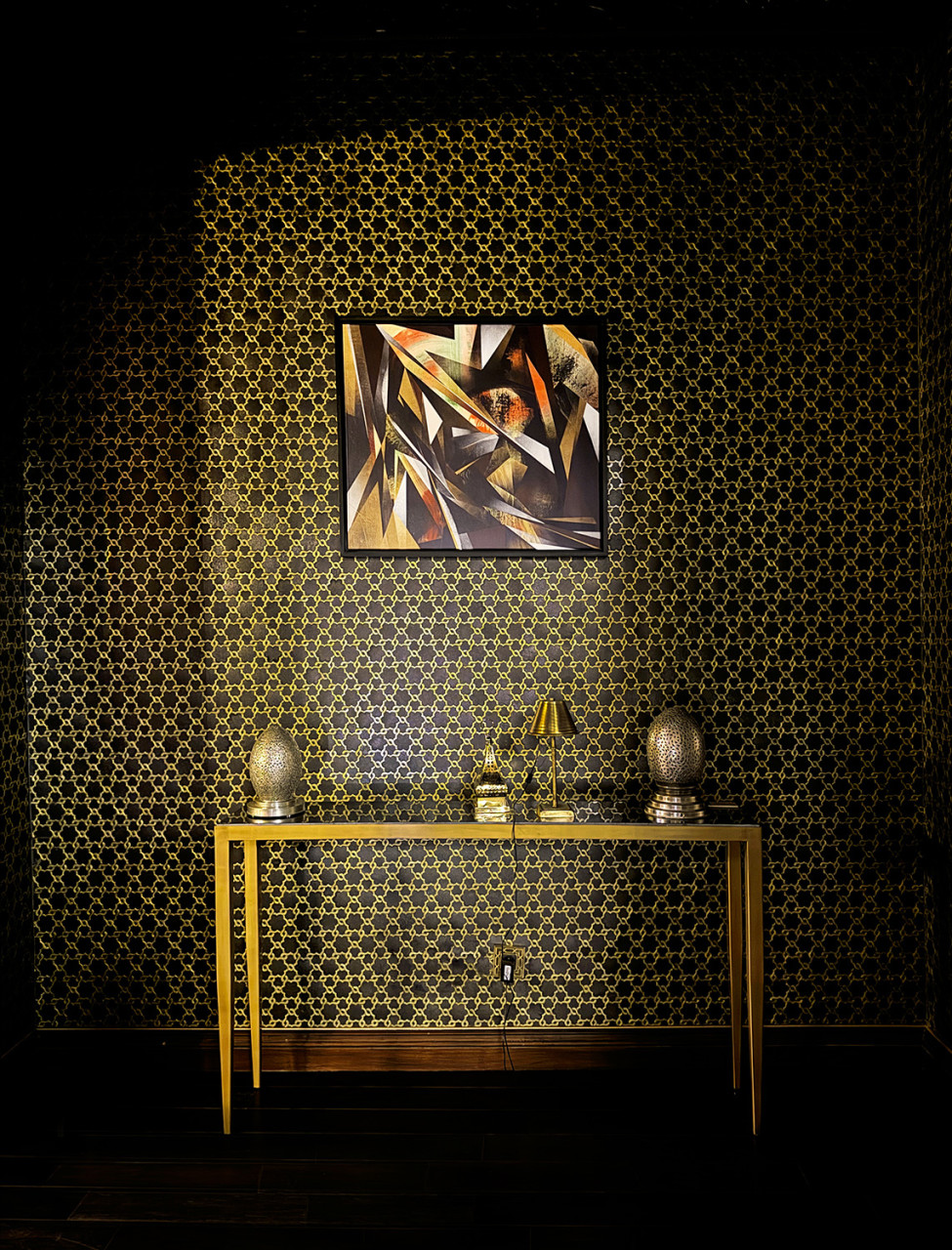
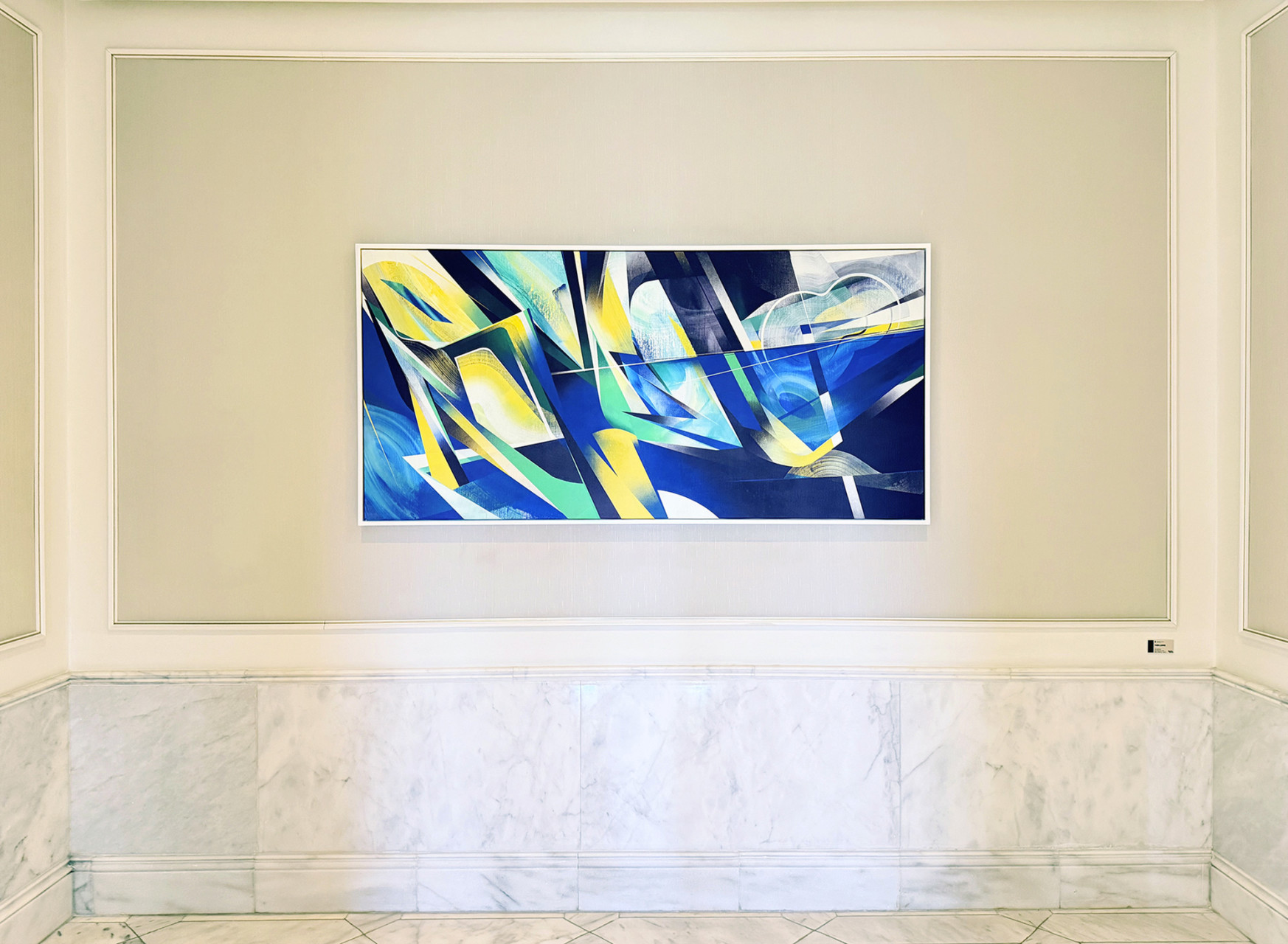
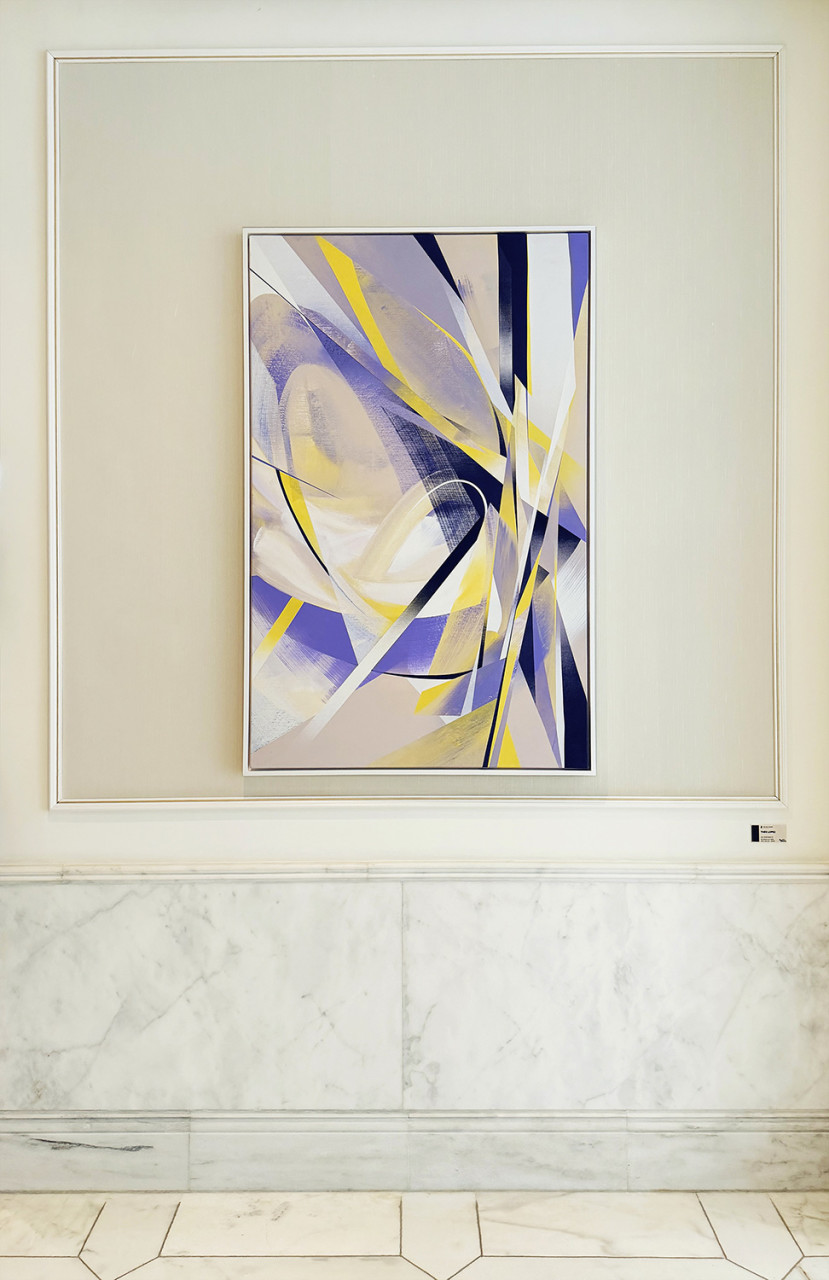
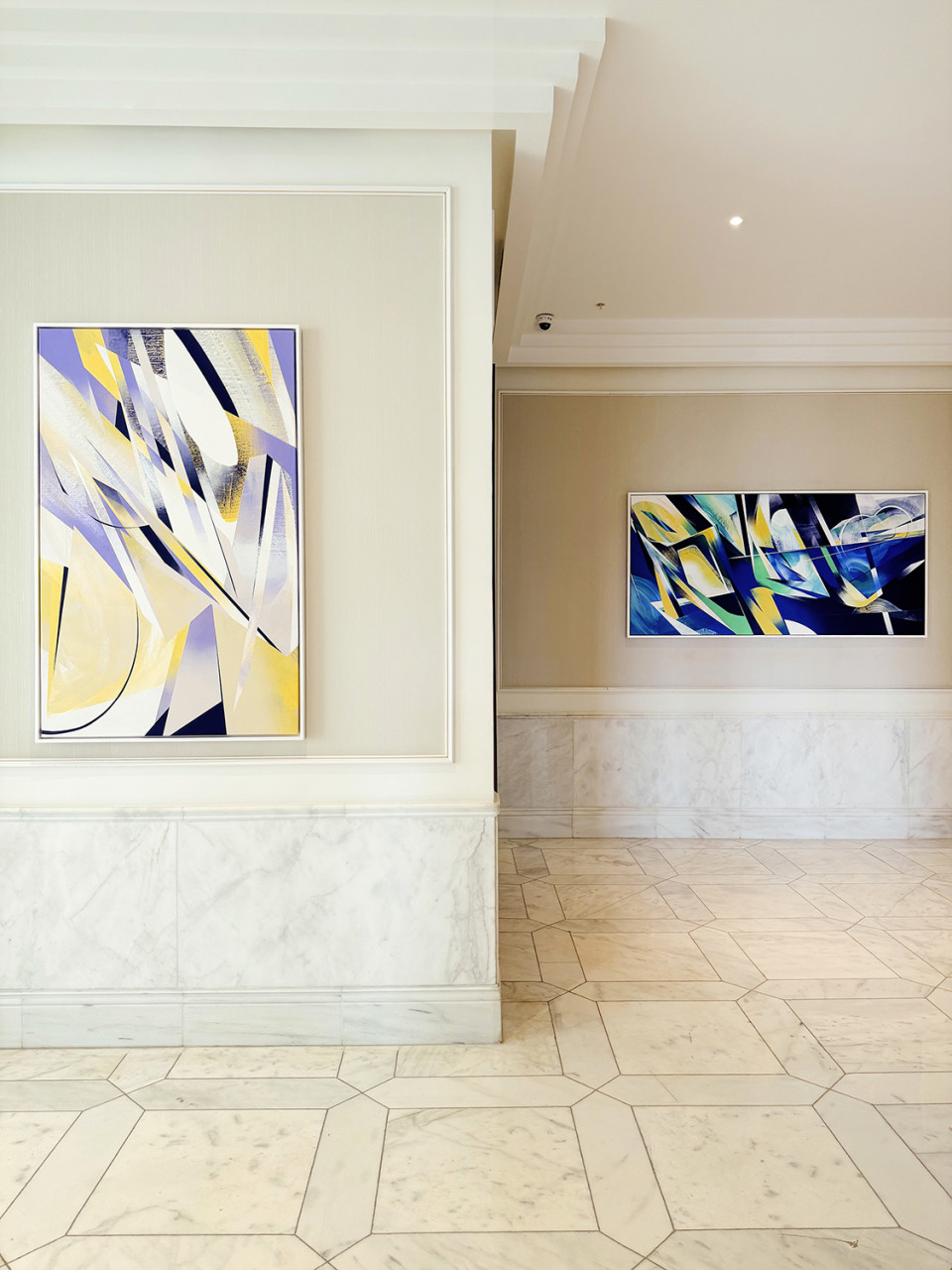
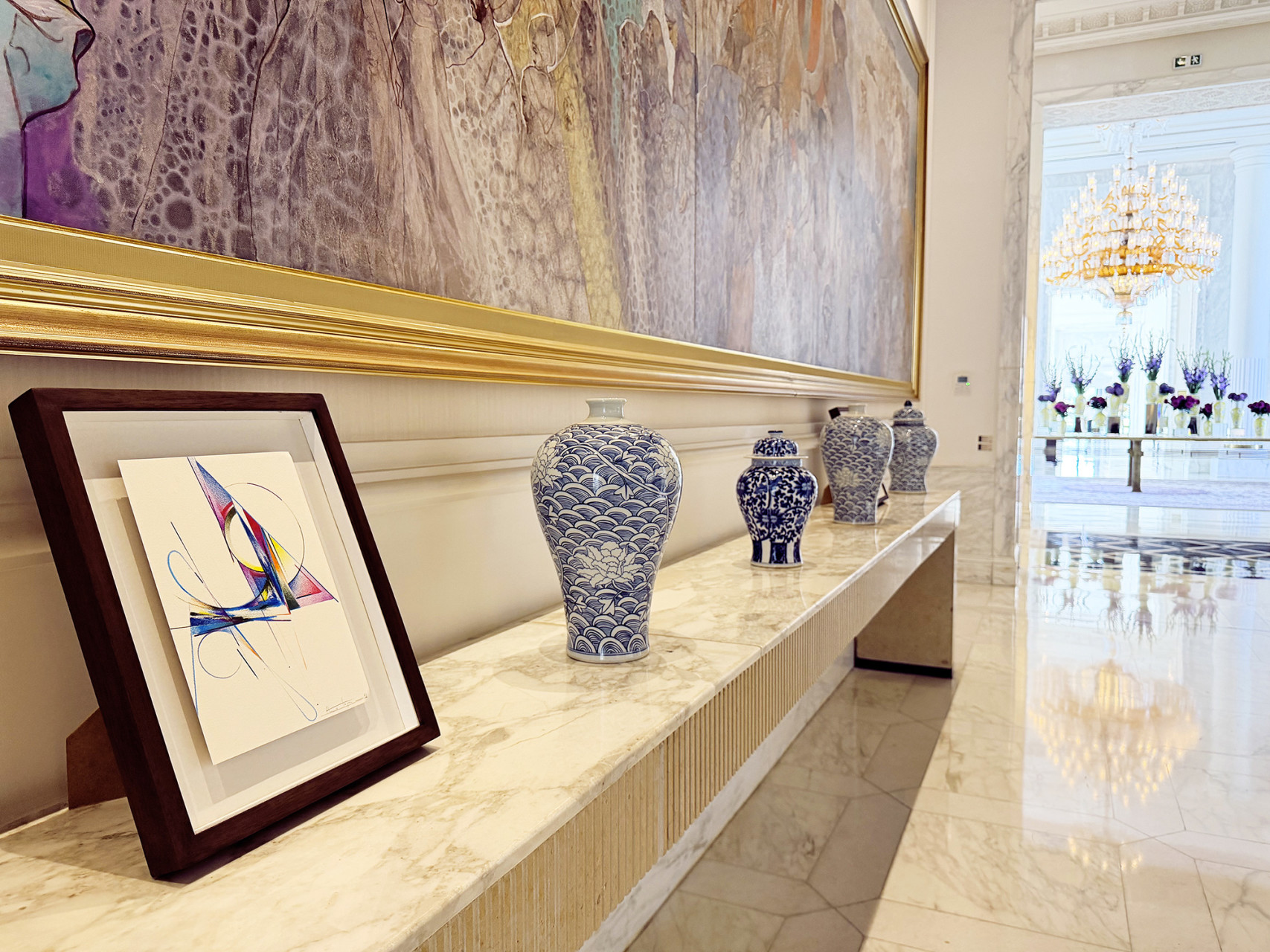

THÉO LOPEZ – Ritz-Carlton Rabat – OCTOBER 9, 2026 > JANUARY 9, 2027
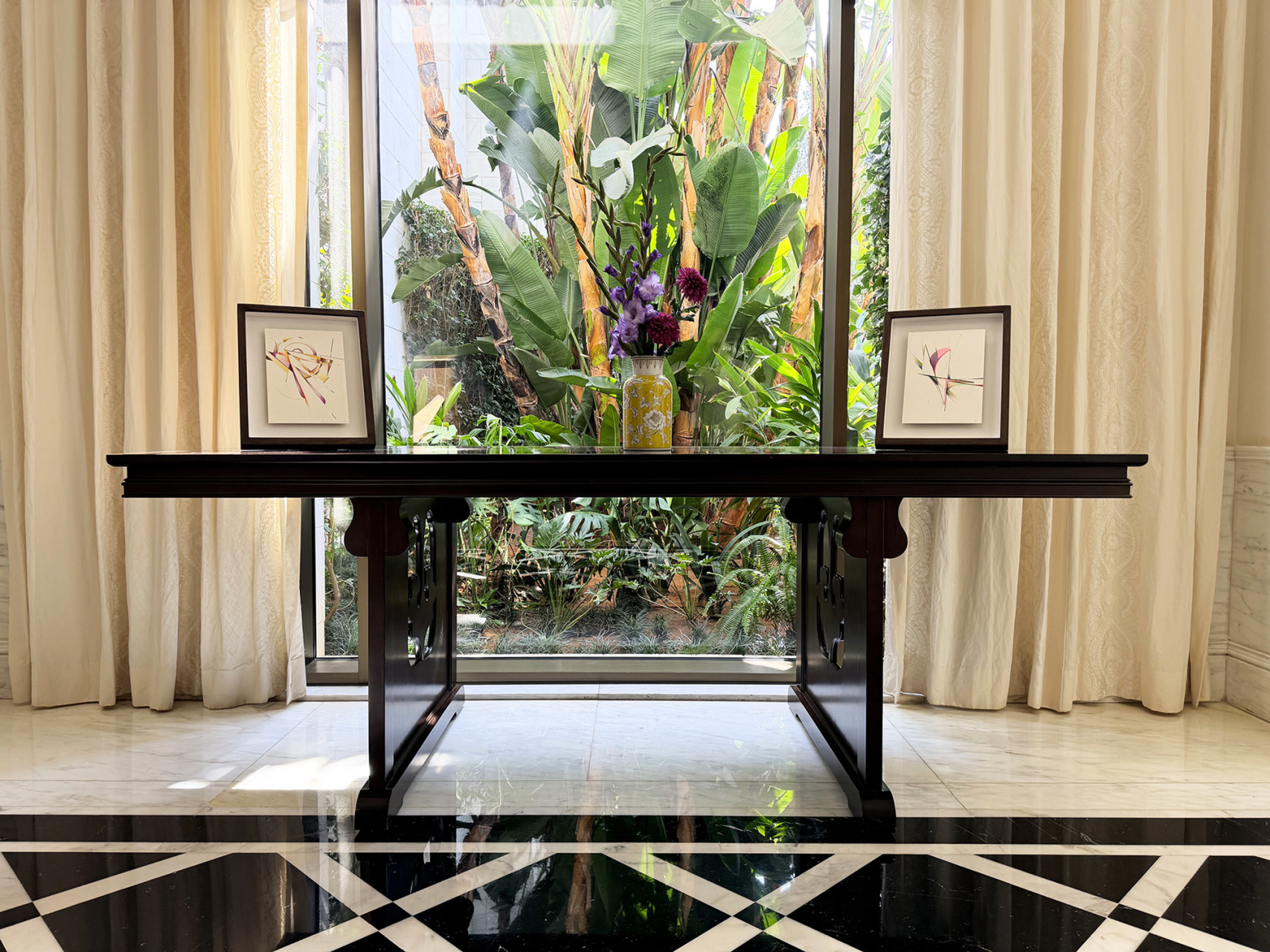
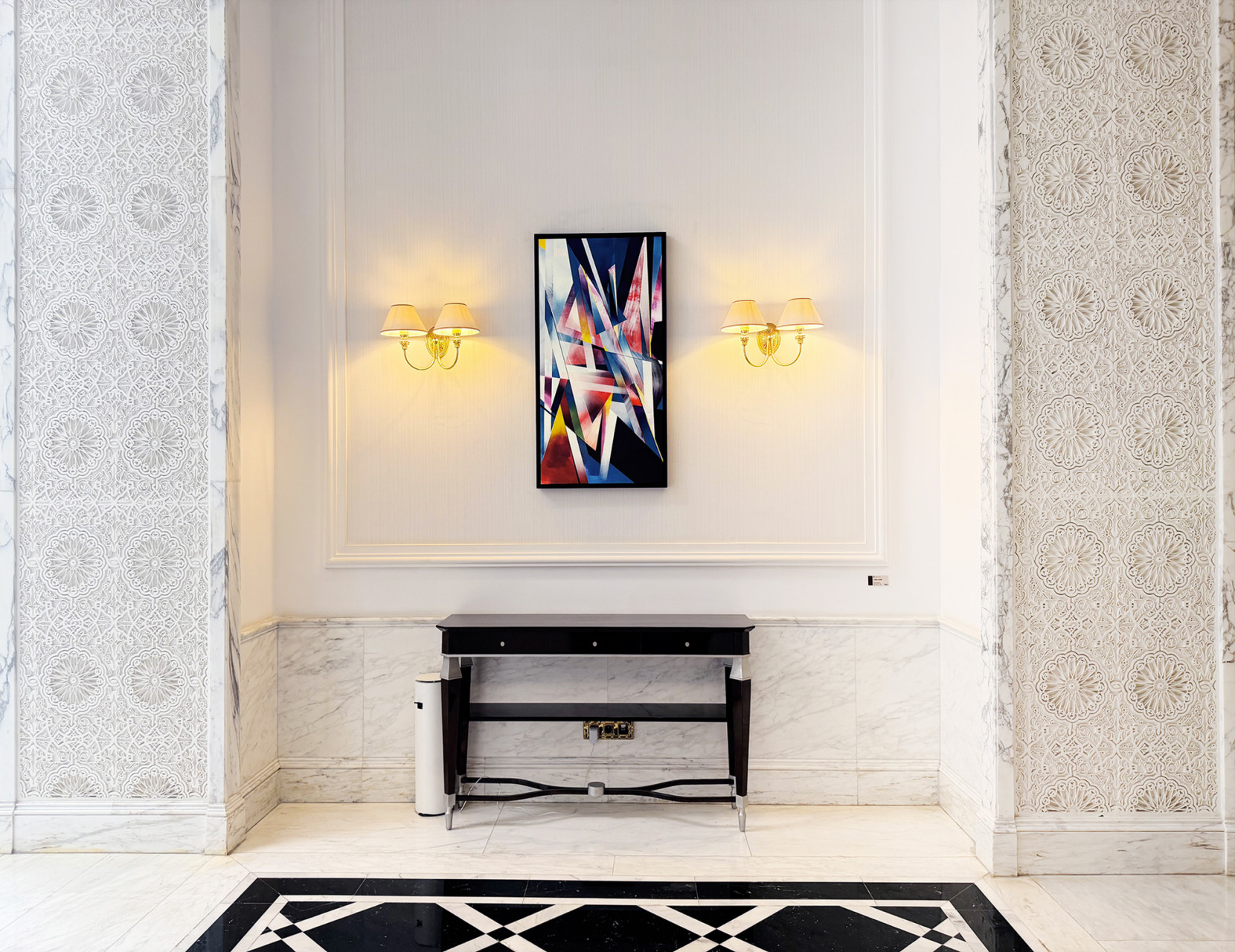
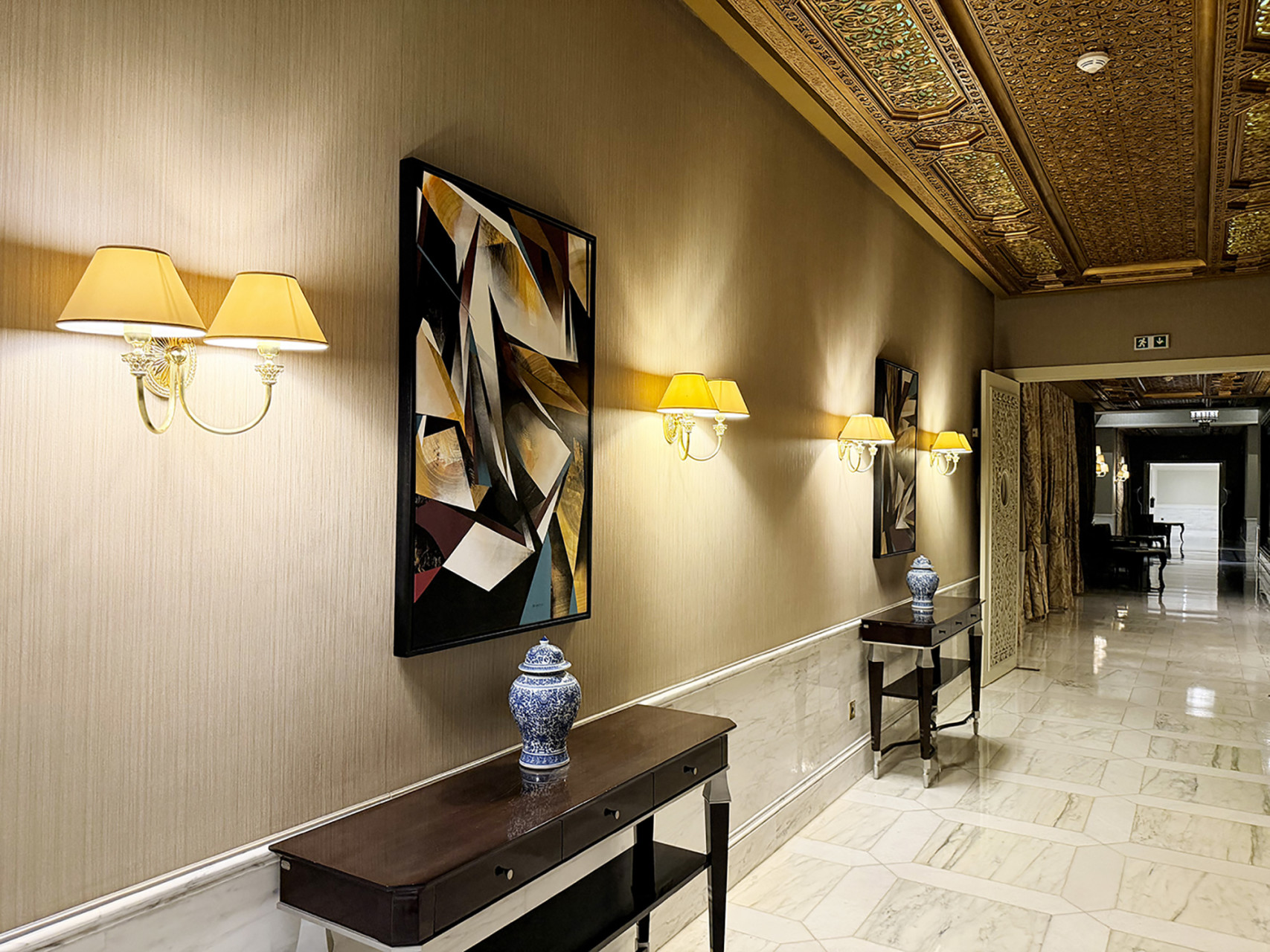
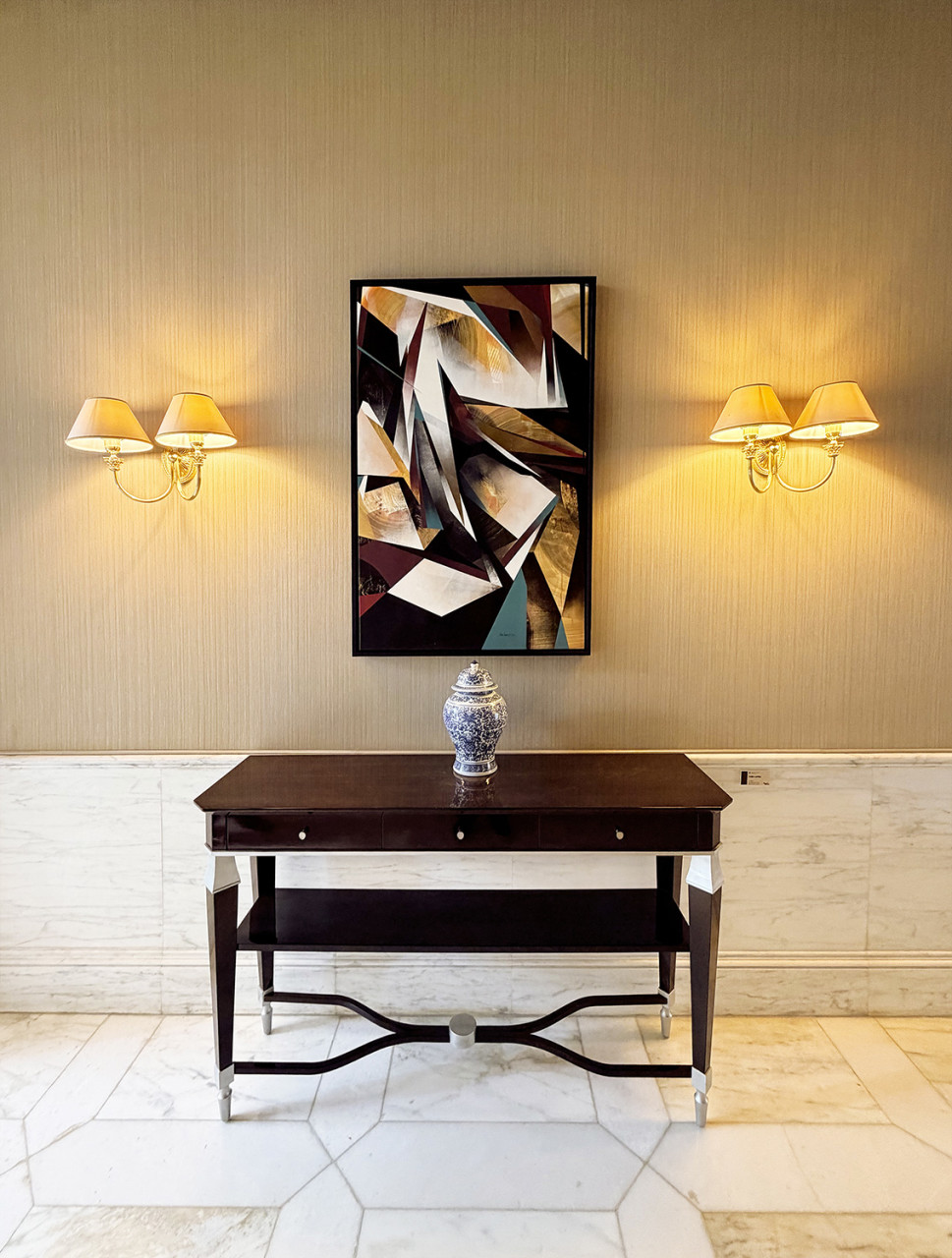
For the first time in Morocco and on the African continent, David Bloch Gallery presents the work of Théo Lopez in an exhibition at The Ritz-Carlton Rabat in October 2026.
The exhibition will remain on view until January 9, 2027.
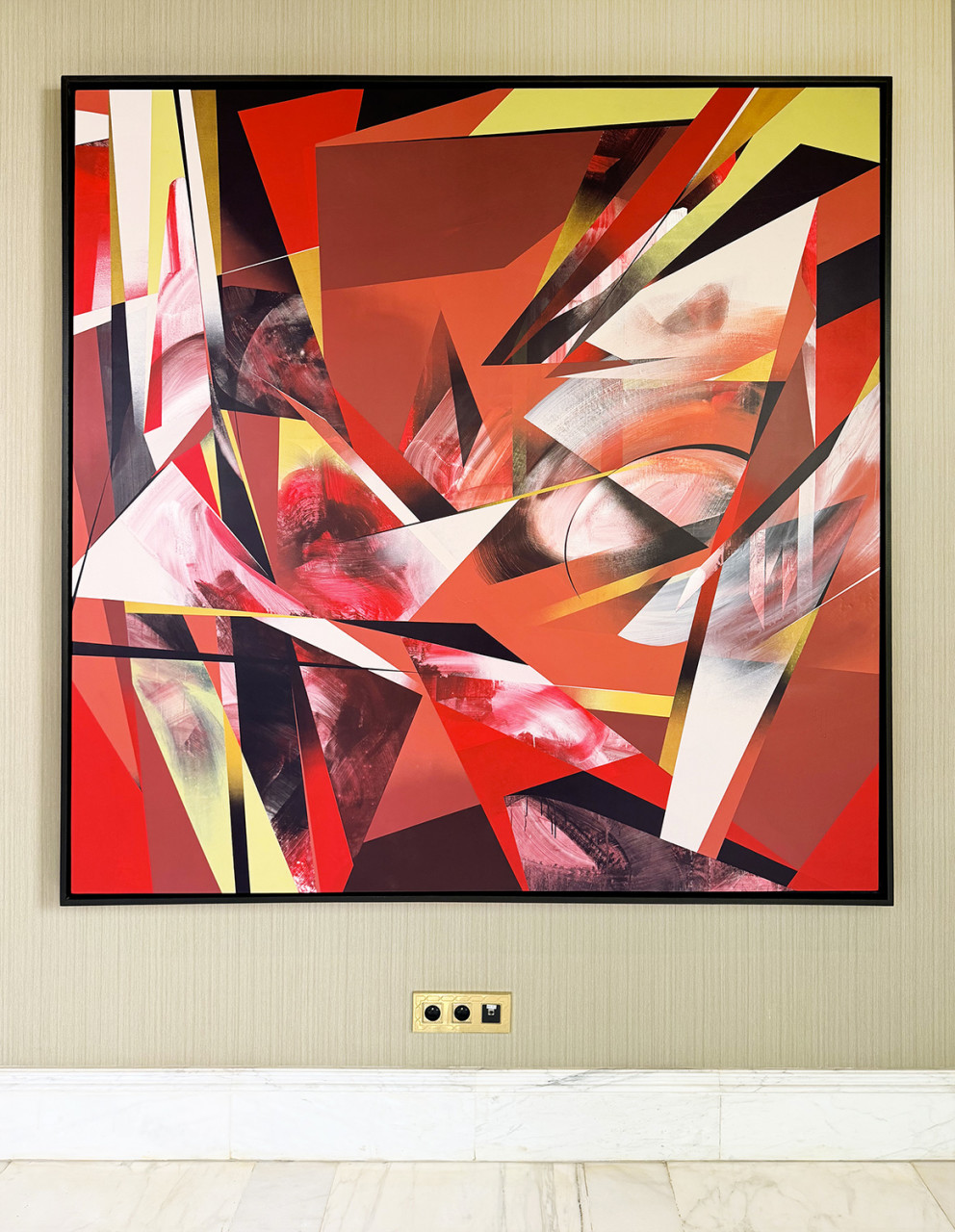
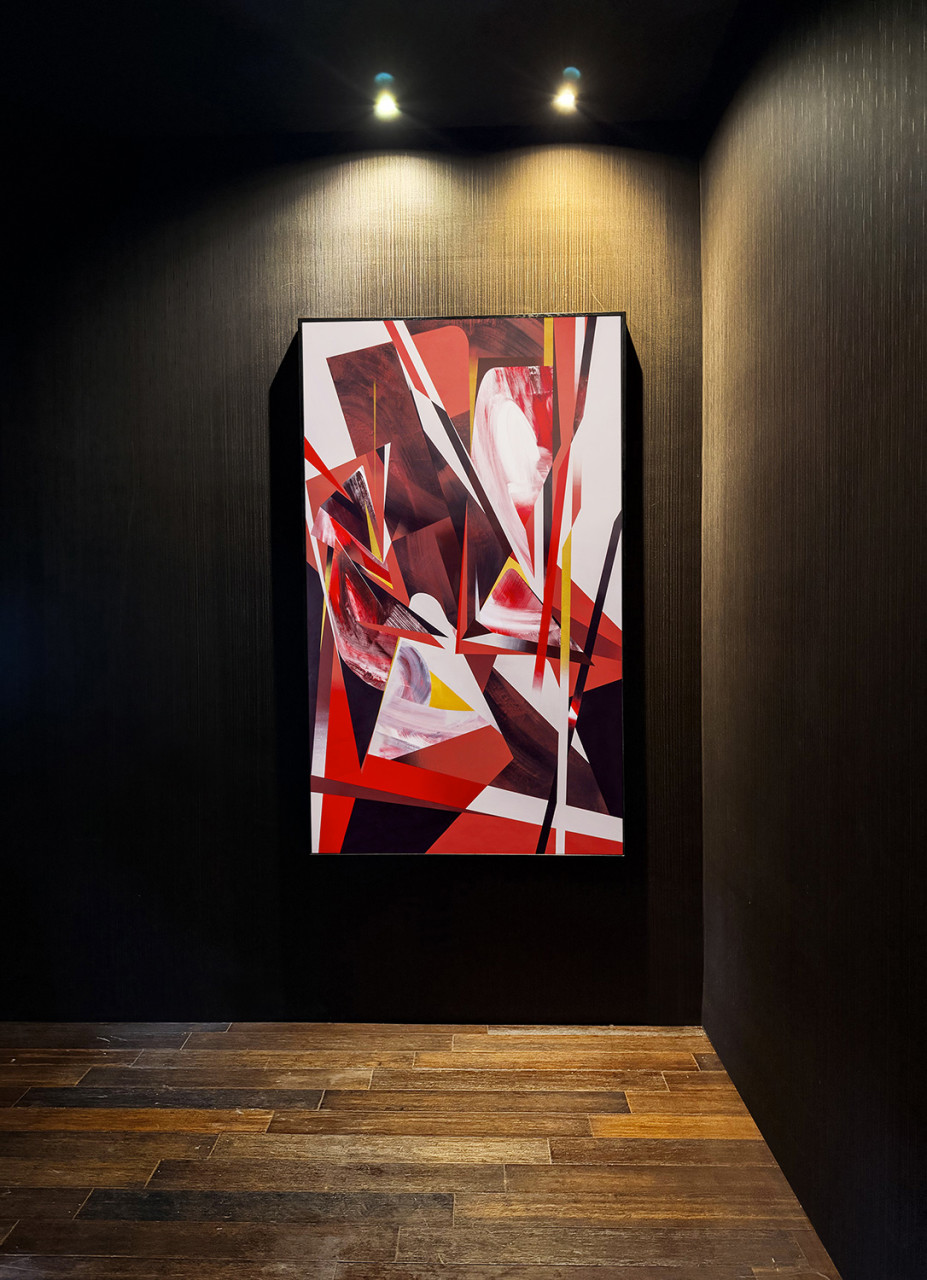
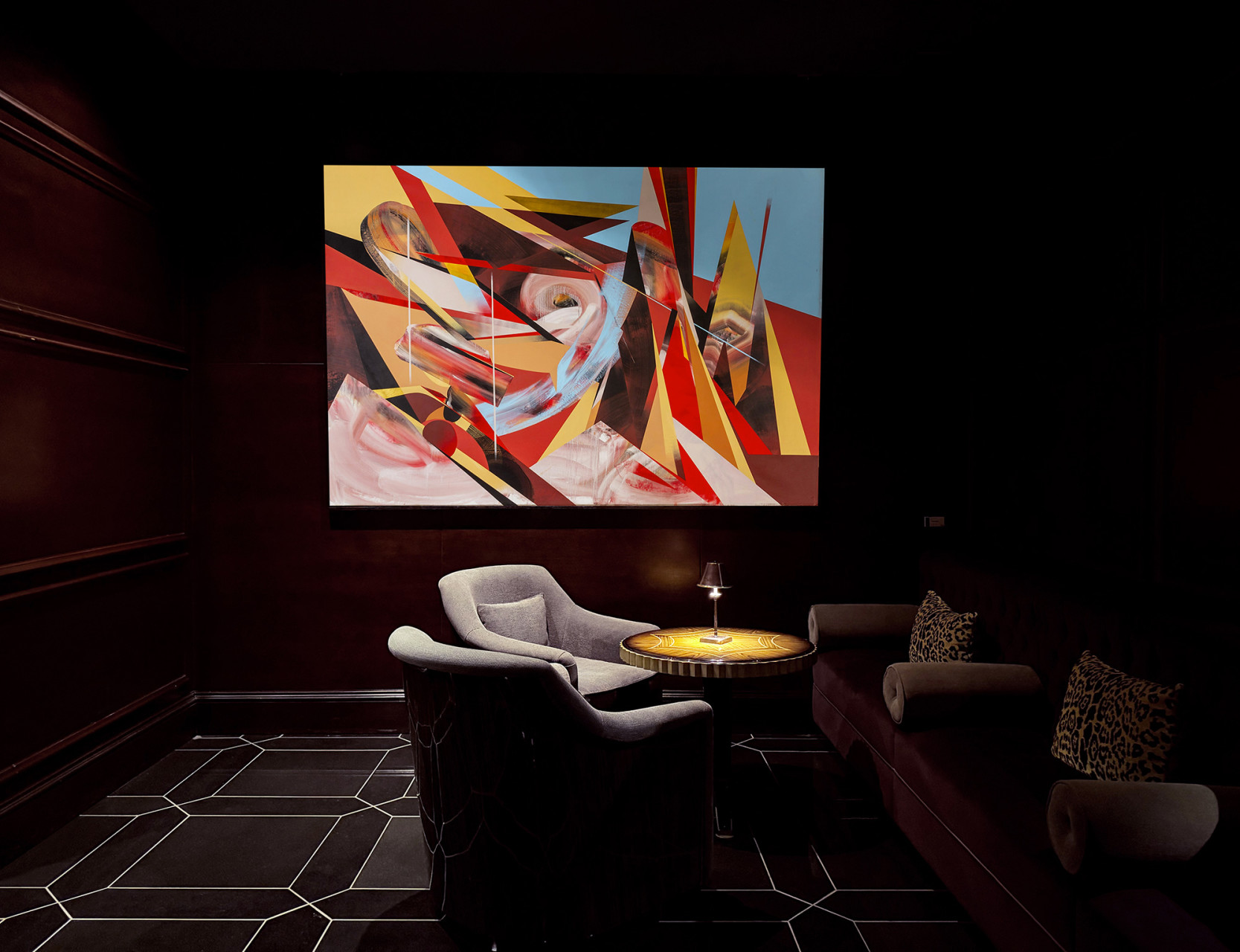
Over the past several years, Théo Lopez has developed a distinctive visual language at the intersection of geometric abstraction, materiality and gesture. His painting unfolds through a continuous dialogue between order and freedom, structure and intuition, control and chance. Far from being cold or purely rational, his geometric compositions are infused with an organic energy that seems to be constantly seeking its own equilibrium.
In Théo Lopez’s work, the line is never merely a boundary. It constructs, divides, connects, conceals and reveals. Geometric forms bring structure to painterly matter that remains in constant motion. Layers, erasures, cut-outs, overpainting, traces and transparencies create complex spaces in which multiple temporalities seem to coexist. Painting thus retains the memory of its own transformation.
This tension between construction and spontaneity lies at the heart of his creative process. The artist often begins without knowing precisely where a work will lead. An intuitive gesture gives rise to an initial layer of material, soon confronted with the need to structure, shift, cover or destroy. Geometry then emerges as an organising force, not to constrain the painting, but to allow it to breathe.
This approach gives rise to compositions in which colour, line and material become the vehicles of a genuinely spatial experience. Planes intersect, depths emerge and recede, and lines seem to extend beyond the boundaries of the canvas. The viewer’s gaze is invited to wander, linger and gradually enter the work.
Yet beyond this formal exploration, Théo Lopez’s practice reveals a deeper dimension: spirituality. For him, the act of creation is a space for concentration, introspection and transformation. Painting becomes a place where the artist allows himself to temporarily lose his bearings, making room for something that cannot be entirely anticipated. His intention is not to depict spirituality, but to create the conditions for an inner experience.
This dimension manifests itself through a recurring balance of opposites: fullness and emptiness, the visible and the hidden, order and chaos, construction and destruction, movement and stillness. Geometry thus becomes less a system than a language through which the invisible can take form.
From this perspective, each canvas may be understood as a mental space. Its successive layers reflect both the different stages of the work’s creation and a form of inner journey. What has been covered is never entirely absent; what emerges bears the traces of what came before. Painting thus becomes a stratification of gestures, decisions, intuitions and accidents.
This exploration is rooted in a history of abstraction encompassing Russian Constructivism, Lyrical Abstraction, Abstract Expressionism and certain contemporary practices influenced by graffiti and urban culture. Yet Théo Lopez does not seek to extend any existing movement. Instead, he absorbs their underlying principles to forge a personal visual language that is immediately recognisable.
His work embodies a fundamental ambition: to bring together the rigour of form and the freedom of gesture, creating a space where matter becomes energy and geometry becomes emotion.
Presented in Morocco for the first time, this exhibition takes on a particular resonance. Amid Rabat’s architectural heritage, rich spiritual traditions and contemporary dynamism, Théo Lopez’s work finds a natural setting for dialogue. His compositions, at once structured and open, propose another way of inhabiting space: not merely as a physical environment, but as an inner realm.
At The Ritz-Carlton Rabat, Théo Lopez invites viewers to move beyond the surface of the painting and enter a world in perpetual transformation — a space where order and chaos, the visible and the invisible, can finally coexist.
David Bloch